


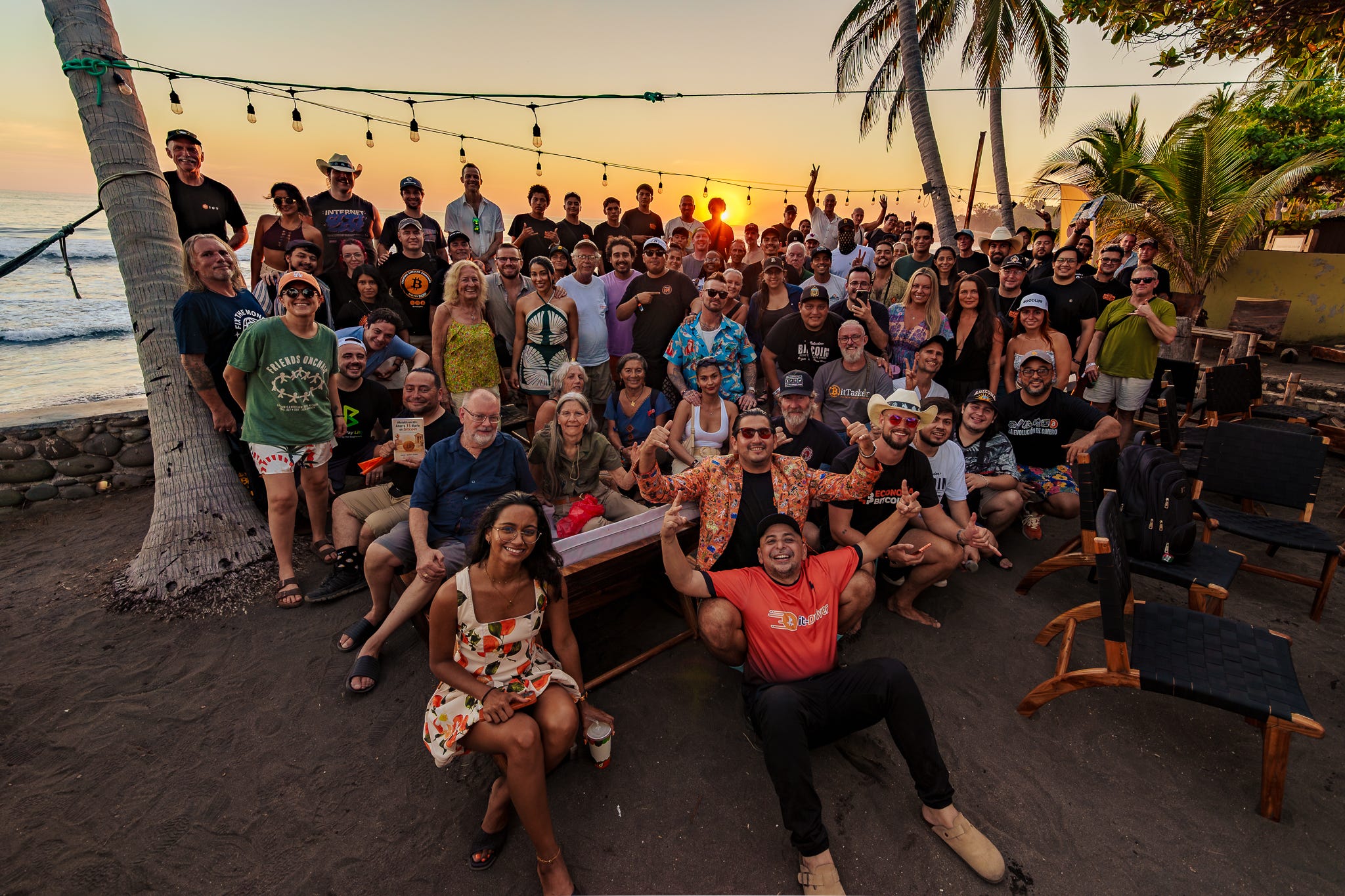
Cuban Bitcoiners built their own Lightning node and an ecash wallet that works without internet. A Brazilian town of 8,000 went from 15 Bitcoin merchants to more than 160. Paystand’s CEO told small, under-resourced communities how to run free, open AI models on a laptop or phone to multiply what they already do best. And Mike Peterson insisted that Bitcoin is “only a tool.”
For a week on the beach where people paid for pupusas and surf lessons in sats long before “Bitcoin Beach” became a global name, leaders of 22 Bitcoin circular economies from 17 countries compared notes on what works and what breaks: suppliers still paid in fiat, merchants left unsupported, founders who leave. The answer kept coming back to Mike Peterson’s opening line: decide what your community needs, then put Bitcoin to work for it.
The Global Bitcoin Circular Economies Summit ran November 17–22 in El Zonte, El Salvador, organized by Bitcoin Beach and the Federation of Bitcoin Circular Economies (FBCE), and closed with a food festival paid in sats. The organizers’ brief was less philosophy, more execution.


This was the third time the global summit was held in El Salvador, and that is by design. Bitcoin Beach hosts 2 summits a year: a global gathering in El Salvador and one focused on projects across Africa, with the next in Cape Town in February 2027. Many of the leaders building circular economies were inspired by Bitcoin Beach after hearing about it on Twitter, in videos or on podcasts. Here they see how Bitcoin has changed communities, and what everyday life on a Bitcoin standard looks like in the first country to make Bitcoin legal tender. Román Martínez, Bitcoin Beach co-founder and community leader, says: “They leave with renewed hope and ideas for what they can build in their own communities. That’s why we keep bringing people here.”
Bitcoin is the tool
The opening message came from Bitcoin Beach itself. The founder Mike Peterson said:
“Bitcoin is a lifeline for those who have suffered the most under today’s financial system... but it is only a tool. Like, if you make Bitcoin your end goal, you’re going to wind up very empty.”
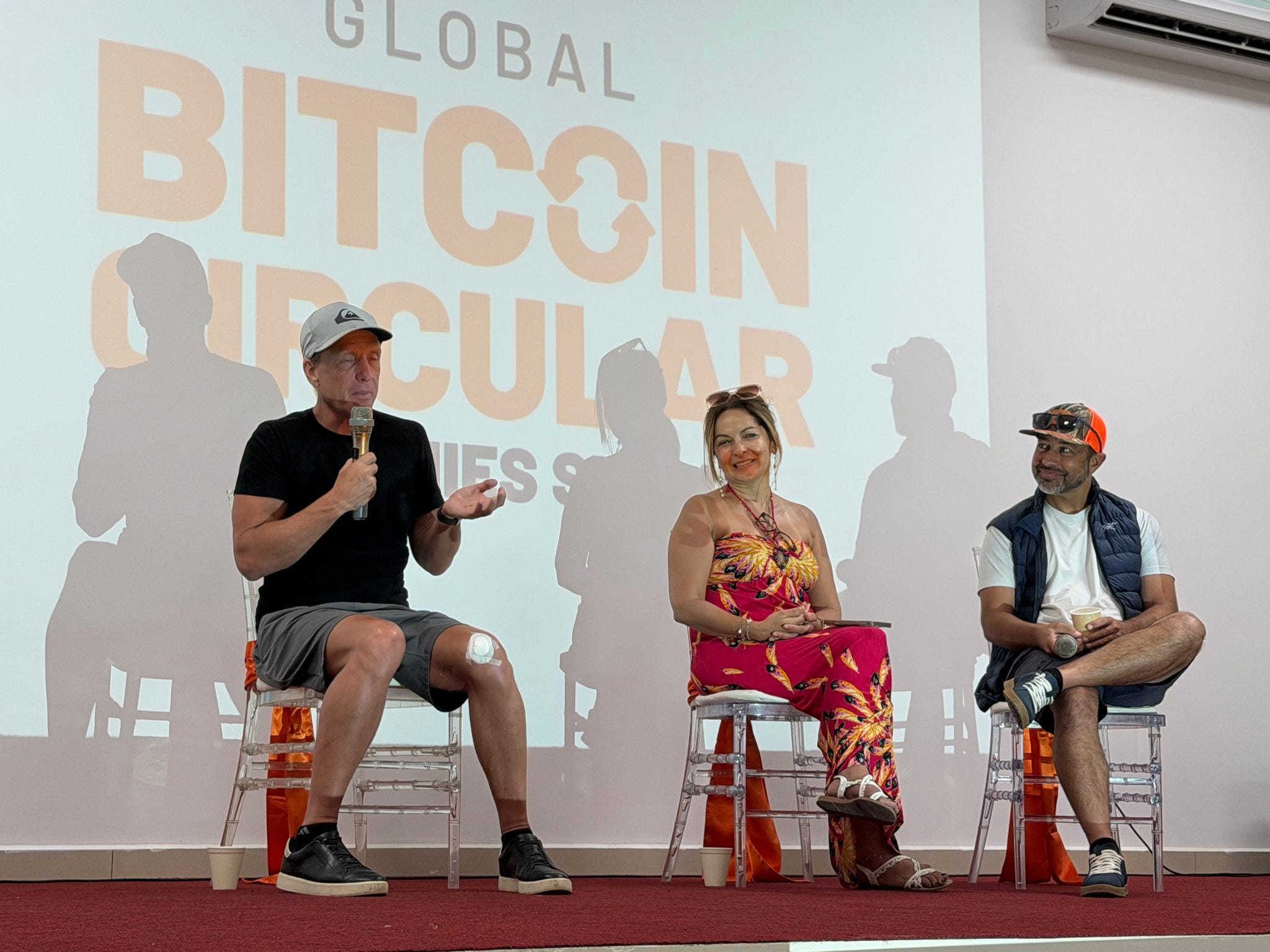
He tied the current infighting in the Bitcoin community to people “trying to make Bitcoin something that it isn’t,” and set the goal as “community transformation... not solely Bitcoin adoption.”
Román Martínez, went further: “Bitcoin is not God, Bitcoin is not a company.” His advice to leaders: “start questioning why we do what we do.”
Mike also gave the room a reality check on volatility. El Zonte is now in its second bear market: “Your first bear market is the hardest. Your second, you see it as an opportunity. And by your third, you just realize this is kind of part of the cycle.”
Beyond “Circular Economy 101”
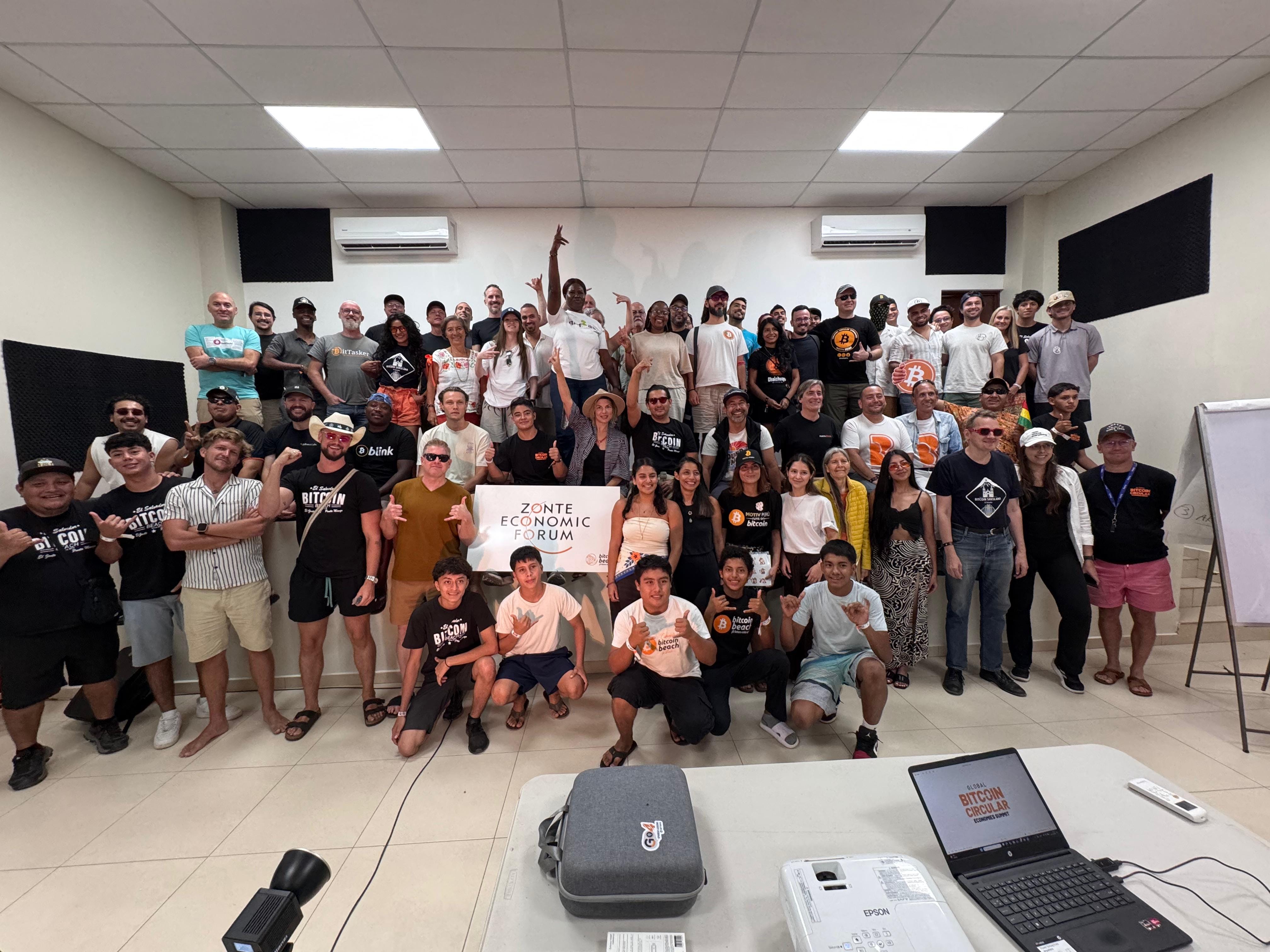
Scott Wolfe of the Federation of Bitcoin Circular Economies named the movement’s problem. The standard playbook (teach Bitcoin, onboard merchants, hand out sats, hope it circulates) “only goes so far.” By his estimate, at least half of new circular economies are still stuck at that stage.
His fix: embed Bitcoin into what a community already does, until it displaces fiat as the unit of account. His examples:
• Bitcoin Ekasi, South Africa: grew out of an existing nonprofit, Surfer Kids, and pays kids in sats for taking part, so sats circulate by design
• AfriBit Kibera, Kenya: after merchant adoption plateaued, launched an online marketplace to sell local crafts across Kenya and beyond
• Ordermoon, Bulgaria: a food-ordering platform for restaurants, priced in sats
• Kenya: a communal trust holds the community’s sats and funds livestock purchases that generate income


The sustainability problem
The toughest panel of the week asked how a circular economy survives without someone constantly injecting sats. Scott split the problem in three: operations, evidence of impact, and people.
• Supply chains: Thinus Mouton of Bitcoin Ekasi said the merchant who sells milk and bread in sats still pays the supplier in fiat. Until suppliers join, sats get off-ramped instead of circulating.
• Merchants: Román said what counts is “how many merchants we can keep alive.” Bitcoin Beach started with 2 merchants. FOMO did the rest, and tourism now sustains it without injections. Places without tourism need production: local markets, services such as Spanish lessons -all paid in sats.
• Donors: Alexandra Navarro, Chief Impact Officer at Paystand, said donors want “numbers,” not just stories. Paystand.org gives 3-year grants, “knowing that 3 years is just the beginning.”
• People: Sibongile Momo of Exonumia said building a circular economy “is emotional work. It takes a lot of grit,” and leaders must delegate and trust their volunteers.
• Ownership: the panel warned that projects started by foreigners often leave when the founder does, repeating the NGO pattern. The lesson: outsiders can plant the seed, but the community has to own it.
Merchants: the debate
On the merchant adoption panel with Gerardo Linares (Bitcoin Berlin), Thinus Mouton (Bitcoin Ekasi) and Eugenio Corea (Bitcoin Jungle), Tomek K of Próspera questioned merchant-first adoption: In Poland, one conversation with an owner onboarded a 12-shop coffee chain, and Steak ‘n Shake did more for merchant adoption “than years probably of single individual orange pillers.” His warning: 60 merchants onboarded and left unsupported become 40 disappointed merchants telling friends Bitcoin doesn’t work. His free tactic: ask every shop “do you accept Bitcoin?”, since the most common reason merchants don’t is that nobody asks.
Others pushed back. A merchant brings a family, a supplier and a local business into the system, and density matters: 3 accepting shops on one street pressure the 2 that don’t.
AI enters the circle
Opening the “Humans, Bitcoin, AI” panel he moderated, Román revealed that Bitcoin Beach delayed its white paper 2.0 to include AI. The new model puts the human side, Bitcoin and AI around the community at the center.
Jon Byrne, founder and CEO of BitTasker, a peer-to-peer gig and task marketplace based in El Salvador, went from 4 staff to 0 in a year. A cyberattack broke his app, and rebuilding with AI made it “100 times better.” He urged the room to build sovereign, peer-to-peer AI to resist “the fiat AI that’s being built around us.”
Jeremy Almond, CEO of Paystand, framed the moment: Bitcoin changes how we store our work, AI changes how we do it. Paystand runs about 350 human employees and 150 “digital employees” with names, roles and KPIs. For small, under-resourced organizations, his point was practical:
• Free open-source tools exist, and open models run about 3 months behind the frontier, on a laptop or phone. “You can be completely sovereign with your models.”
• Not everyone needs to build products: “maybe we don’t need 1 million more products.” Use AI to multiply what you already do best. “Let’s have 10 more Mikes.”
• AI, like money, “can’t be controlled by two companies.”
The communities are already doing it. At Bitcoin Ekasi, a community leader vibe-coded “Study and Stack” to run its Bitcoin diploma program. Panamá Soberano answers its 160-member Telegram group with an AI agent.

Reports from the ground
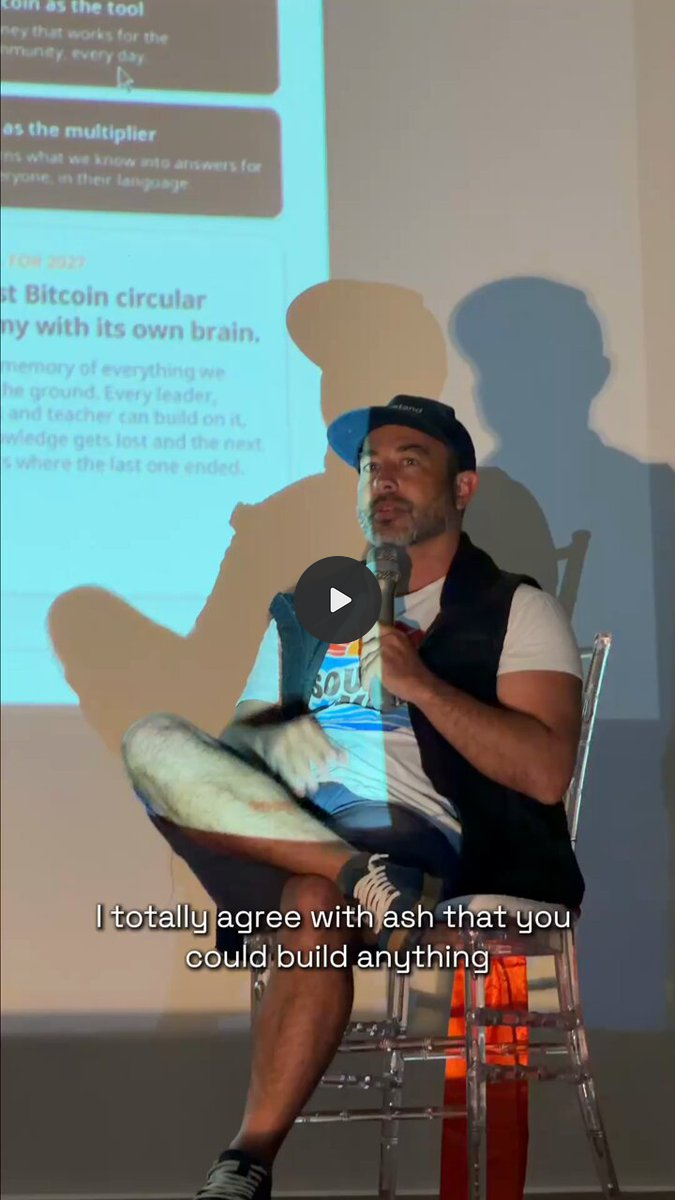
In 5-minute talks, communities shared what they’ve built. I captured only some of the presentations, due to the heat and the quantity! I was surprised and pleased to see so many projects presented. Here’s what I captured:
One point of failure, one point of control
Apart from being a fascinated fly on the wall, and enjoy the personal connections created, I also participated in some panels.
On the “Staying Safe in 2026” panel, moderated by Gerson Martínez with Thgo (BTCPay Server) and Jon Byrne (BitTasker), I spoke about dependence. Microsoft 365, the FAA and Chase all went down within a week, allegedly they weren’t hacked. I stressed that a single point of failure is also a single point of control: the same chokepoint can freeze, censor and surveil. KYC databases leak and become target lists for wrench attacks, stablecoins come with a freeze button, and Bitcoin kept producing blocks through all three outages.
I also moderated the “El Salvador Bitcoin Country” panel with Will (Asobitcoin), Jamie (The Bitcoin Hardware Store), Murph (MurphsLife) and Pamela Posada (Sisters of Satoshi), on why the country became a hub for Bitcoiners and what’s still missing.


The takeaway: community first
The summit’s best talks came from people who have already turned Bitcoin into local money, and are now teaching each other to do it again, town by town. El Zonte has become an incubator: 13 towns are in Bitcoin Beach’s Pueblos Bitcoin program. The open questions are shared ones: supply chains, sustainable funding, burnout and local ownership. The answer the week kept returning to was the one Mike opened with: Bitcoin is the tool, and the goal is the community.
— End


Please take a moment to like, subscribe, comment and share this article.
♥️ Efrat
Recent interviews:


Connect with me:
Twitter | YouTube | Instagram | Nostr | LinkedIn | My podcast | All other links
Sponsors:

Sovereignty Summit
→ Join me for New Zealand’s Sovereignty Summit 🇳🇿 on April 2–3, 2027, for an exploration of sovereign living, from tech and freedom to health, land, food and family, with the most beautiful backdrop & experience in nature. 15% off with code EFRAT → SovereigntySummit.nz
Ledn
→ Building a bitcoin position takes discipline. The platform you borrow against should have the same discipline. Ledn: custodied loans, never lent out for interest. Hard assets, higher standards. https://ledn.io/Efrat → 0.25% off your first loan.

Trezor
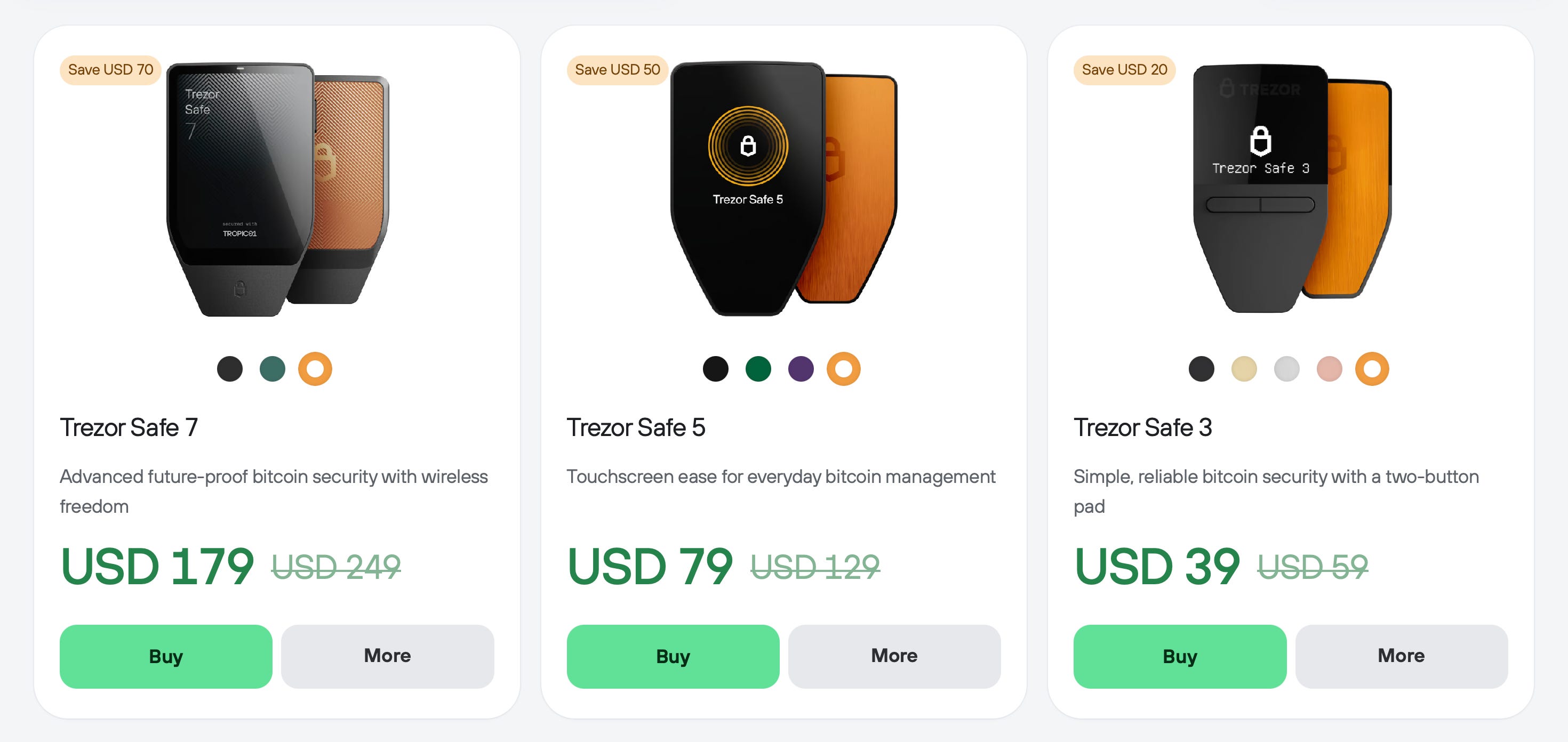
→ Trezor Sales Season is on! Till Dec. 20, 2026, up to 40% off wallet & accessories. Best prices of the year: https://tinyurl.com/trezorSale

Abundant Mines
→ Freshly mined bitcoin into self-custody, without giving up your privacy. Own the equipment, keep 100% of the bitcoin, and let professionals run the operation. U.S. subscribers: ask your CPA about potential tax advantages.
Get 1 month of free hosting at AbundantMines.com/Efrat/

Special offers:
→ Want to preserve your privacy online? Get a GrapheneOS privacy phone or laptop, up to $150 off “Above Phone” products + extra $50 off with code EFRAT: https://abovephone.com/efrat/

→ Get 15% off “Born To Be Free” all-natural, tallow-based skincare products on a bitcoin standard, using code EFRAT: https://oshi.link/1nvZYq


→ Join me at any of these conferences or events:

→ Get 10% off on Augmented NAC to detox the Spike protein, using the code: YCXKQDK2, and this link. (Please note, this is not medical advice and you should consult your MD). Watch the episode with Tina below.


→ Watch “New Totalitarian Order” conference with Prof. Mattias Desmet & Efrat - use code EFRAT for 10% off

— Support my work —
I was recently banned from Stripe, so I cannot have paid memberships on Substack… but there’s always another way!
I cannot for the life of me think of a more disingenuous, corporate, soul-sucking money-grubbing tool than Bitcoin. And you know what? I no longer ever think of it and neither does anyone else.