

Paul Rosenberg is a cypherpunk author and cryptography advocate who has been in the movement since finding the original cypherpunk circles in 1995. Cryptography pioneer, author of 80 books, multiple newsletters, co-founder of Cryptohippie. He wrote A Lodging of Wayfaring Men, often called the Cypherpunks Bible, imagining a parallel society built on encryption and voluntary trade, years before Bitcoin existed. He also sat in the courtroom for Ross Ulbricht's trial. This conversation is one of my favorites: an 11-year-old prediction about Bitcoin as the next reserve currency, his eyewitness account of the Ulbricht trial, cryptography's fight against US export restrictions in the '90s, and why fear is a deliberate brain hack. Paul is one of the wisest people I've had on this show, listen and you'll see why.
Please like, comment, share & follow — to help me beat the suppressing algo’s. Thx!
Follow Paul: Nostr | Paul’s Newsletters | “A Lodging of Wayfaring Men” free audiobook
Paul’s newsletter:

— Support my work —
I was recently banned from Stripe, so I cannot have paid memberships on Substack… but there’s always another way!
Takeaways:
A surveillance state rarely needs a single villain behind it. It emerges from an accumulation of institutions, each one just doing what seemed convenient or profitable at the time, until the aggregate becomes something none of them could have built alone.
Fear works as a deliberate brain hack, and someone usually benefits from deploying it. Once you can recognize that mechanism in the moment it’s happening to you, you stop being an easy target for it.
Watching a government stop mocking a movement and start showing up to court says more about that movement’s momentum than any poll or headline ever could.
Sitting inside a courtroom teaches how easily the appearance of due process can mask decisions that were made long before anyone took the stand. A judge quietly editing a trial transcript over a weekend is the kind of detail that never makes it into the official record.
A currency that requires printing more of itself to survive is eventually forced into a binary choice between hyperinflation and default, and governments will almost always choose to keep printing rather than face the political consequences of default.
The hardest part of adopting a genuinely new idea about money isn’t intelligence. It’s psychological willingness to sit with something unfamiliar long enough to actually understand it, and most people simply don’t have the time or safety to do that.
Encryption was once classified as a weapon under US export law, restricted the same way a missile would be. The privacy tools we take for granted today exist because a small group of people were willing to risk prison to get the code out into the world.
Covid showed how quickly people who called themselves free speech advocates could disappear the moment defending speech actually cost them something. Watching an entire class of vocal supporters vanish overnight was more revealing than anything they had said before that.
A chaotic, decentralized AI landscape full of competing, imperfect players can be safer for humanity than a smooth, centralized one. Entropy, messy as it looks from the outside, is often what keeps power from consolidating in the first place.
Charity and care for the poor existed long before the modern welfare state, built by ordinary people who could not simply print unlimited money and instead built systems of mutual support that had to work within real constraints.
Honest money makes war, bribery, and unchecked government spending structurally harder, because there is finally a real price attached to every one of those choices.
What gives Paul the most hope for humanity’s future is watching people quietly rediscover that certain traditional values around commitment, family, and purpose were healthier all along than the alternatives they had been sold.
Every single person changes the world just by making choices every day. The world as it exists right now is nothing more than the aggregate of billions of individual decisions, which means no one participating in it is actually powerless.
Connect with me:
Twitter | YouTube | Instagram | Nostr | My podcast | All other links
Sponsors:
Expat Money
→ Download the free report on second citizenships & setting up a plan B in another country with Expat Money: https://expatmoney.com/efrat

Watch my episode with Mikkel for more:

Ledn
→ Access liquidity without selling your Bitcoin, get 0.25% off your first loan: https://ledn.io/Efrat


Trezor
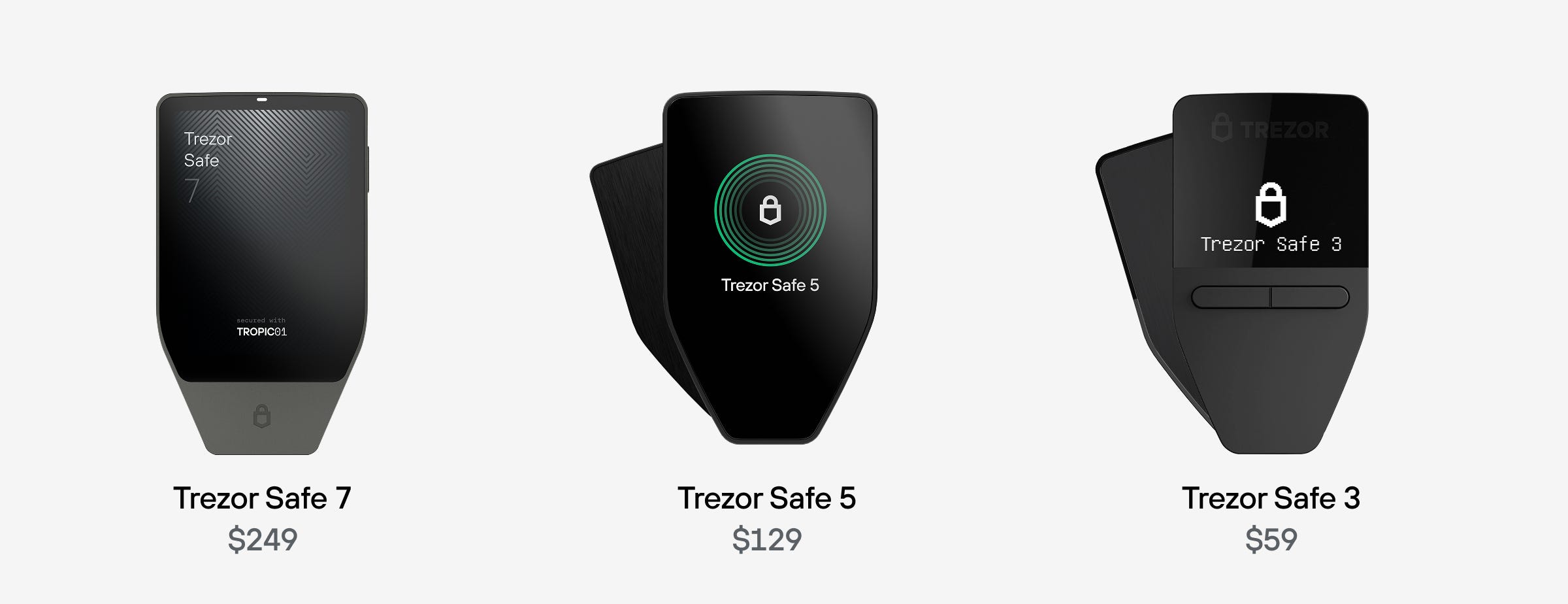
→ Get your TREZOR wallet & accessories, with a 5% discount, using my code at checkout (get my discount code from the episode - yep, you’ll have to watch it)

Abundant Mines
→ Have you tried mining bitcoin? Stack sats directly to your wallet while saving on taxes with Abundant Mines. A month of free hosting for my followers:

Special offers:
→ Get 15% off “Born To Be Free” all-natural, tallow-based skincare products on a bitcoin standard, using code EFRAT: https://oshi.link/1nvZYq


→ Join me at any of these conferences or events:

→ Get 10% off on Augmented NAC to detox the Spike protein, using the code: YCXKQDK2, and this link. (Please note, this is not medical advice and you should consult your MD). Watch the episode with Tina below.


→ Watch “New Totalitarian Order” conference with Prof. Mattias Desmet & Efrat - use code EFRAT for 10% off

— Support my work —
I was recently banned from Stripe, so I cannot have paid memberships on Substack… but there’s always another way!


