


At twenty-four years old, Bob McDonell did not like children. He says that openly. He was not drawn to them, not especially patient, not imagining a future spent caring for traumatized kids. He was studying physics, building a career in sales, doing what many people do when life seems settled from the outside. And then something interrupted that trajectory in a way he did not plan for and could not ignore.
Watch the full interview with Bob
Bob describes it as a moment of clarity, a calling, what today we might call “a download”. Sitting at his desk, he felt an unmistakable instruction take shape, find the children who need help the most, give them food, shelter, education, protection, and love, and do it for the rest of your life. He didn’t have a blueprint; he had no funding, no organization behind him. He only had a responsibility that, once downloaded & seen, could not be unseen.
A few years later, Bob arrived in El Salvador in the middle of a civil war, at a time when major international organizations were leaving because it was too dangerous to stay. It was there that he began building what would become known as the the House of Life. Being persistent and deeply committed to his cause, the government initially entrusted him with one child while keeping an eye on him. Then came four more children, then two more. All abandoned, all in danger, all likely to die if someone did not intervene. Bob paid for everything himself, raising children in a war zone while running a business thousands of miles away to finance God’s vision and his mission.
Eventually, his own board told him to stop expanding and focus on the first twenty-eight children. Breaking abuse cycles requires depth and rebuilding of trust, not scale. Amazingly, those twenty-eight children are now in their mid-forties, and none of them abandoned their own children. None of them repeated the abuse they experienced.
Children as Targets of Gang Violence
Before El Salvador’s recent transformation, gangs operated with near-total impunity, and children were among their primary targets. Gang members would come to family homes and demand access to young girls under the pretense of “protection,” knowing that refusal could mean death for the parents. Many families complied out of fear. Children were trafficked within their own communities, repeatedly abused, sold, and in some cases subjected to ritualistic violence that left deep physical and psychological scars. Bob has taken in children bearing burn marks, cuts, and signs of systematic abuse linked to satanic rituals, experiences so dark that most societies refuse to acknowledge them. The violence functioned as a normalized system of terror, sustained by silence, fear, and the absence of meaningful protection.
Over the years, Bob worked closely with trauma specialists, including world-renowned child psychiatrists from Harvard, notably with Alexandra Harrison mentioned in our interview, to evaluate and support the children coming into his care. Their conclusion challenged a foundational assumption of modern aid culture: Trauma therapy alone does not work if a child returns to an unsafe environment, and healing does not begin with talking, it begins with protection. Only when a child feels consistently safe does the nervous system calm enough for healing to take place. Structure, predictability, responsibility, and belonging do more than weekly sessions layered on top of chaos.
How UN/UNICEF Entrenched Child Abuse
One of the most damaging forces Bob has witnessed did not come from gangs, but from international policy and global organizations. A Harvard Bucharest Early Intervention Project, conducted in some of the worst orphanages in the world which sadly abused the orphanages too, led to a sweeping global conclusion that children were safer in family environments than in institutions, even if those environments were the source of their traumatic abuse. On the basis of this, UNICEF and other UN-affiliated organizations such as USAID incentivized governments to dismantle children’s homes and return children to their communities at almost any cost. In practice, this meant sending children back to the very environments where they had been raped, trafficked, or abused. Homes that actually worked were closed because they did not fit the ideology. Across Central America and Africa, children were pushed back into danger and, in many cases, onto the streets.
El Salvador’s Shift in Security and Child Protection
Today, in El Salvador, fewer than nine hundred children are in protective custody in a country of over six million people, and the number of available homes has fallen by more than half in the past decade. But the trajectory is positive; Under President Nayib Bukele, El Salvador has undergone a dramatic positive transformation. Gang members and abusers who once operated with total impunity are now imprisoned, communities are safer and children can walk to school. But every solution exposes a new problem. Many of the imprisoned gang members had children. Those children are now abandoned, unwanted by extended families and communities still afraid of their lineage. Bob recognizes the pattern, as he began his work during the civil war. He believes that a new lost generation is now emerging, children of incarcerated gang members, with nowhere to go. Therefore, Bob’s seeking more financial support these days, to be able to invest in more houses of life and more shelters for lost children.
How Trust Is Rebuilt After Extreme Abuse
One of Bob’s most counterintuitive insights is that the most important people in any children’s home are the eighteen-year-olds who stay. Traumatized children do not trust adults, as they failed them first. But they do trust other children. New arrivals do not ask staff if they are safe, they ask the older kids: “Is there food here? Do they touch you here? Can you go to school? Are you protected here?”. Trust spreads horizontally before it ever moves vertically, which is why the House of Life does not force children out when they turn eighteen. They’re welcome to stay and support the younger generation, and many of them do.
There is structure and rules at House of Life that would make many Western observers uncomfortable… No cell phones before eighteen, no phones without jobs to pay for service. At the House of Life privileges are earned and consequences are enforced. The girls themselves defend this structure, and many say it is the first time in their lives that rules are consistent and boundaries are real. Structure, in this context, is a framework to prepare them for life, rather than a punishment.
Preparing Girls for Adult Life
The future of the House of Life shifted when Bitcoiners began to get involved; they donated land, and it wasn’t charity, it was part of a plan to teach ownership, build homes, and teach the girls valuable skills. The girls also started earning an income, and saving half of it in Bitcoin. When a girl accumulates enough to help build a home for another teenage mother, she receives her own property. The process repeats which creates a multiplying system of responsibility.
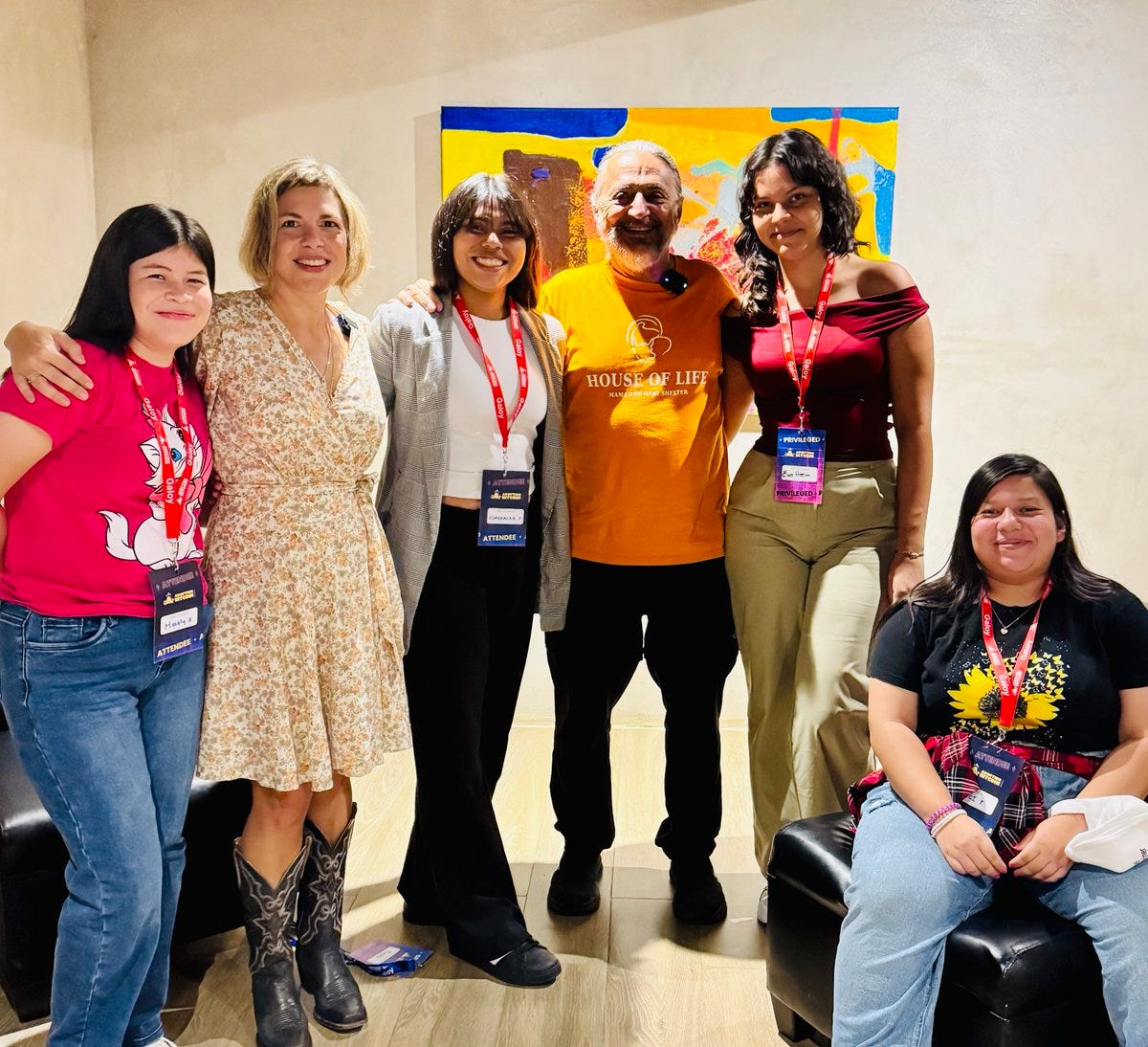
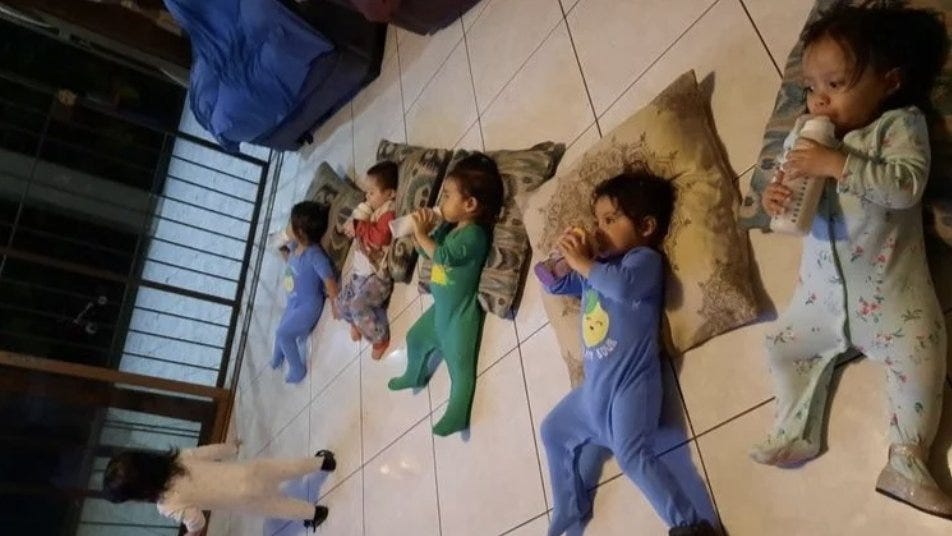
Right now, Bob needs fifty thousand dollars to expand one House of Life from eight girls to sixteen, doubling capacity without losing the family structure that makes it work. For perspective, U.S. border holding facilities spend roughly eight hundred dollars per day per child. House of Life cares for a mother and baby for less than eight hundred dollars per month, with ninety-six percent of donations going directly to the children. The math is simple.
Bob followed a calling that demanded more than belief. He committed his life to it and remained when there were no guarantees, no applause, and no institutional support. Thirty-five years on, the evidence lives in men and women who broke generational cycles of abuse. This is what happens when a calling is answered and lived out.
/End
Watch the full episode:


Learn more about the House of Life, and donate if you can: https://www.micasakids.org/
Follow Bob McDonell :
Twitter | House of Life’s website
Watch the full episode on my blog, Spotify, YouTube, Rumble and more. Got value? please like, comment & share!
— Support my work —
I was recently banned from Stripe, so I cannot have paid memberships on Substack… but there’s always another way!
Follow me:
Twitter | YouTube | Instagram | My podcast | All other links
Sponsors:
Ledn
→ Access liquidity without selling your Bitcoin with Ledn — learn more at https://ledn.io/Efrat

Trezor
→ Get your TREZOR wallet & accessories, with a 5% discount, using my code at checkout (get my discount code from the episode - yep, you’ll have to watch it)


Abundant Mines
→ Have you tried mining bitcoin? Stack sats directly to your wallet while saving on taxes with Abundant Mines. A month of free hosting for my followers:

Special offers:
→ Join us at the first-ever Women of Bitcoin Summit!

→ Join me at Europe’s biggest and most influential Bitcoin event! Enjoy 10% off your BTC Prague using the promo code EFRAT at checkout.


→ Get 10% off on Augmented NAC to detox the Spike protein, using the code: YCXKQDK2, and this link. (Please note, this is not medical advice and you should consult your MD). Watch the episode with Tina below.


→ Be good to your eyes & health, and get the Daylight tablet - a healthier, more human-friendly computer, zero flicker & zero blue light. Use code EFRAT for $25 off: https://bit.ly/Efrat_daylight

→ Watch “New Totalitarian Order” conference with Prof. Mattias Desmet & Efrat - use code EFRAT for 10% off

→ Get a second citizenship and a plan B to relocate to another country with Expat Money, leave your details for a follow up: https://expatmoney.com/efrat

— Support my work —
I was recently banned from Stripe, so I cannot have paid memberships on Substack… but there’s always another way!


